
Description
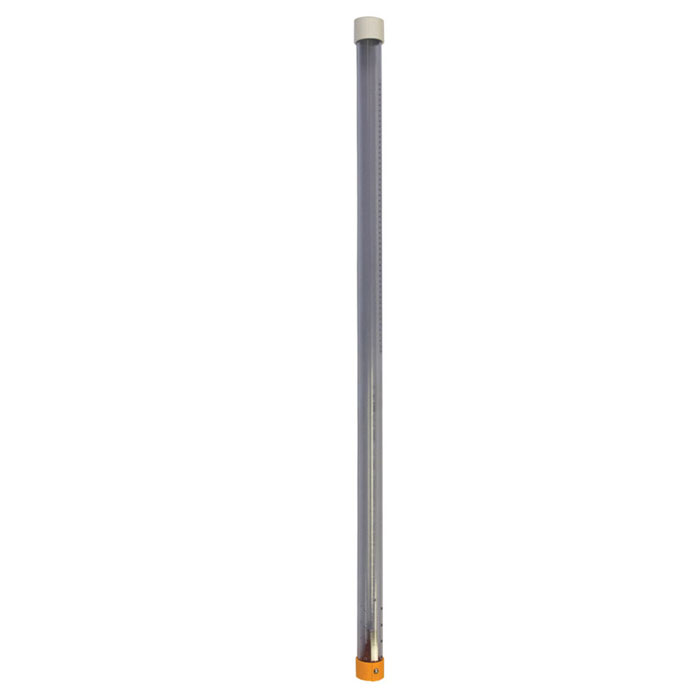
The field saturated hydraulic conductivity (Kfs) or permeability of soil and septic fill can be quickly and easily measured in place using the ETC Slow Soils Constant Head Permeameter Kit manufactured by Dynamic Monitors. The ETC Slow Soils Constant Head Permeameter is a variation of the ETC Standard Pask Permeameter, but is more accurate for testing slowly permeable soils such as: Clay, Clay Loam, Sandy Clay Loam, Silty Clay Loam, Silt, Silt Loam, Loam and possibly Sandy Loam if the sand is fine or the silt plus clay content is high. The applicable Kfs range for the ETC Slow Soil Pask Permeameter is approximately 5mm/day (0.20 inches/day) to 500mm/day (0.20 inches/day) or an approximate percolation rate of 50 minutes/inch or greater.
The Pask Permeameter is named after David Pask, a public health engineer formerly with the Nova Scotia Dept. of Environment, who advocated for its use in onsite sewage assessments. It has become very popular in Canada and the USA as a convenient and much less expensive alternative to other constant head permeameters such as the Guelph Permeameter®. The test procedure is based on the constant head well permeameter (CHWP) single ponded height method described by Reynolds (2008) and by Elrick and Reynolds (1986).
Check this blog article for a detailed 20 point comparison of the ETC Pask Permeameter to the Guelph Permeameter.
ETC has prepared an updated, user-friendly guide which incorporates the research by Reynolds, Elrick and others. An abbreviated version of ETC’s User Guide has been incorporated into the new CSA B65-12 Installation Code for Decentralized Wastewater Systems and also the New Brunswick Department of Health’s Technical Guidelines for On-site Sewage Disposal Systems.
Advantages of the ETC Slow Soils Constant Head Permeameter :
- This permeameter is extremely light, minimizing the potential for it to sink into the soil and cause errors.
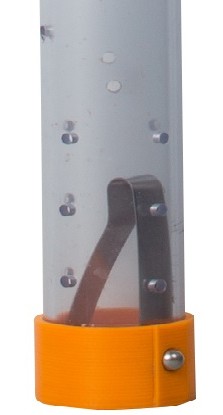
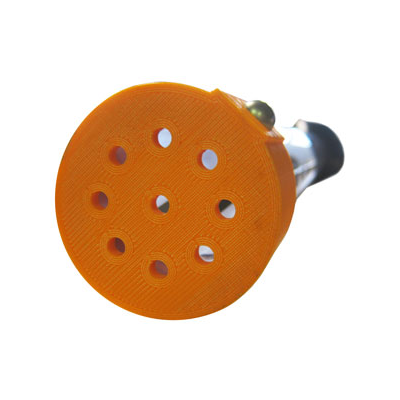
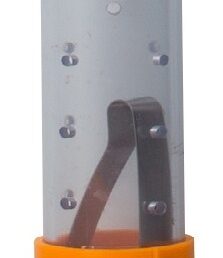
- NEW! Our permeameter features a custom designed ABS cap with a secure, stainless steel clip. No more concerns about losing rubber stoppers in the bottom of the well holes!
- Very fast setup and tear down compared to other constant head permeameters (see video below).
- Small amount of water needed, typically less than 0.5 usgal (2 Liters) per test.
- Very visual; easy for homeowners to see how it works, and whether they have “good” soil or not.
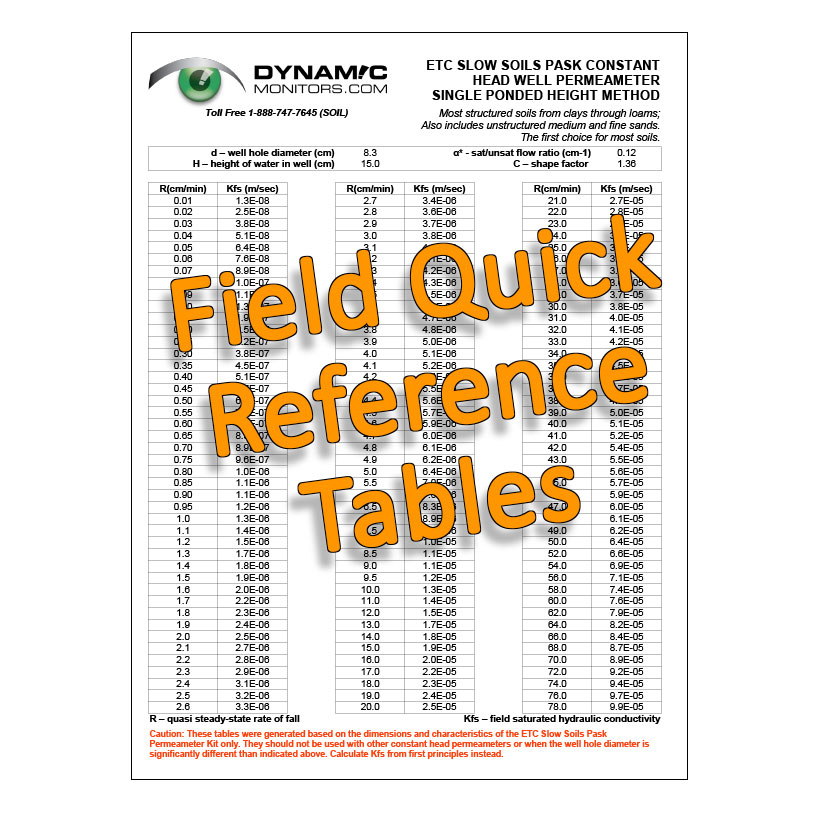
- Calculations are made easy using ETC’s Quick Field Reference Tables. You can determine the Kfs value in less than 10 seconds!
- Constant head of water created by the ETC permeameter helps to minimize the impact of errors caused by improper soil characterization (estimation of α*).
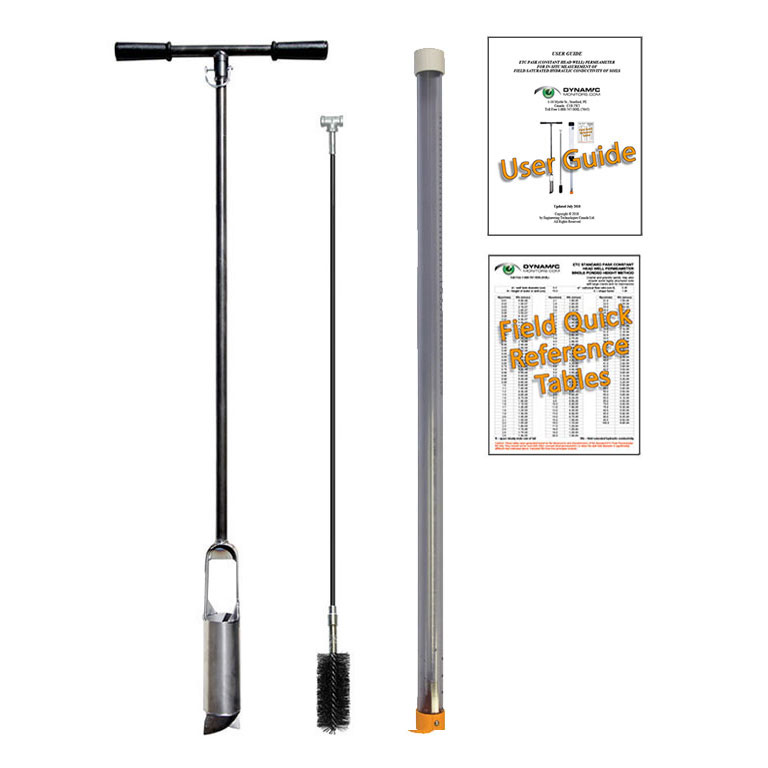
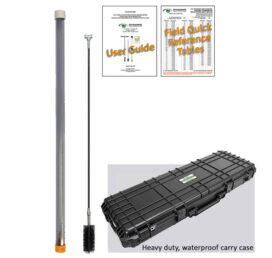
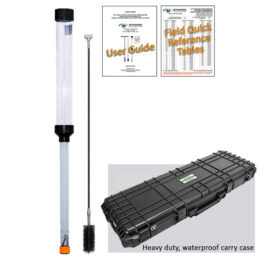
The ETC Slow Soils Constant Head Pask Permeameter Kit comes with the following items:
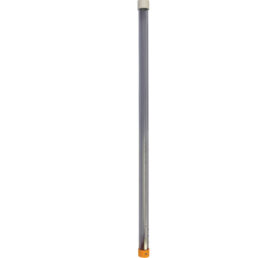
- ETC Slow Soils Constant Head Pask Permeameter with custom ABS cap and stainless steel clip
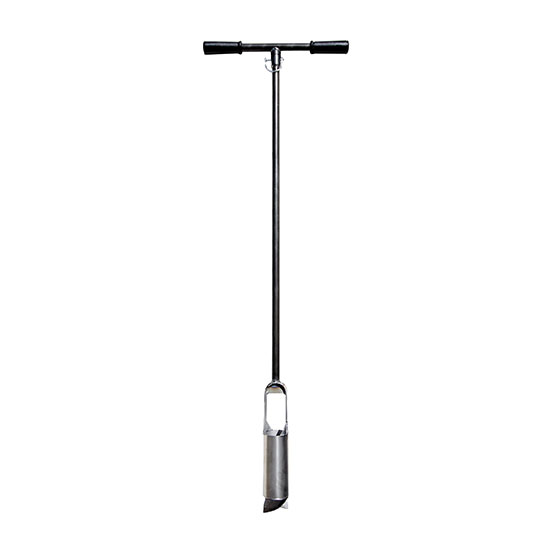
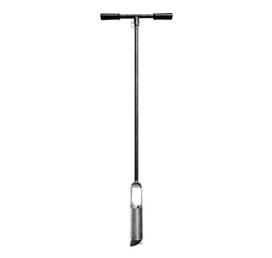
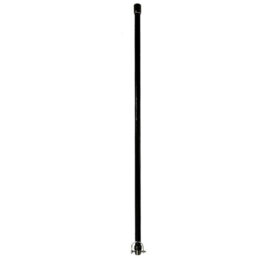
- AMS three-piece, Riverside auger, nominal auger diameter 2 ¾”
- ETC Quick Reference Field Calculation Tables based on our standard auger included in the kit which produces a typical well hole size of 3 ¼” (8.3cm)
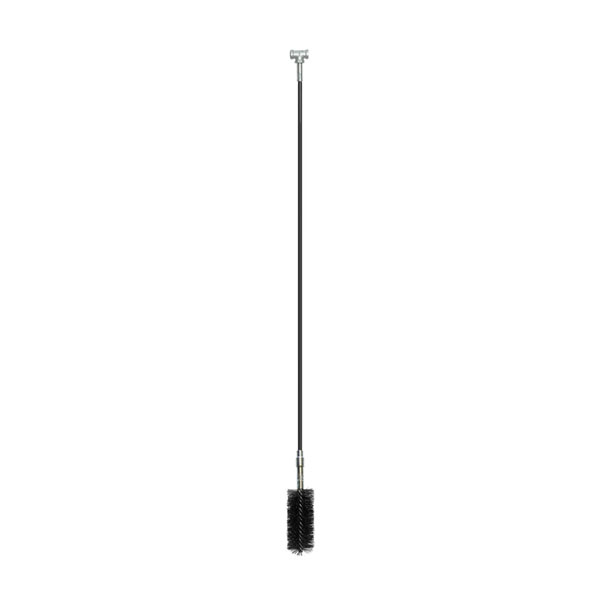
- 2″ (50mm) Twisted wire brush (for scarifying and removing smear layers in the permeameter well hole)
- Water extractor kit (syringe and tubing to remove excess water from overfilled well holes in slow soils)
- Pask Permeameter User Guide
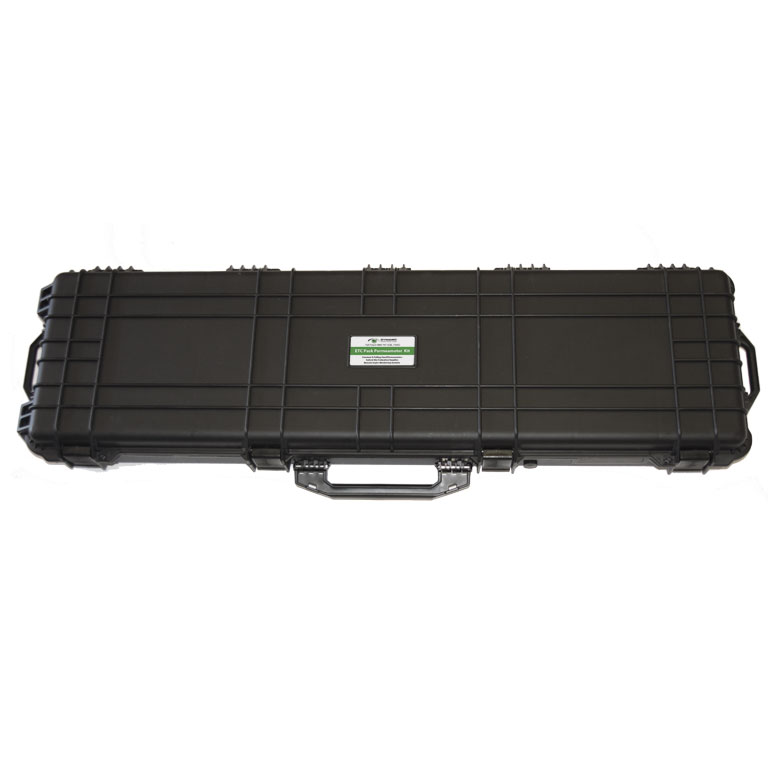
- Hard-sided storage/carry case.
The three-piece Riverside soil auger used to prepare the well hole is manufactured by industry leader, AMS Samplers.
The standard duty auger head is strong and durable, and will stand up to the wear and tear of daily use. They have a stainless steel cylinder, and a rounded, carbon-steel bail which improves torque resistance. The cutting blades (bits) are hand-forged, heat-treated with tungsten-carbide, hard-surfaced edges. The shape of the blades are ideally suited to achieve a uniform diameter, flat-bottom well hole, which is assumed in the CHWP theory and calculations. The blades create a borehole diameter that exceeds the cylinder by approximately 1/4–1/2 in. (0.64–1.27 cm) to reduce drag. The auger provided with our kits produces an average finished well hole diameter of approximately 3 ¼” (8.3cm).
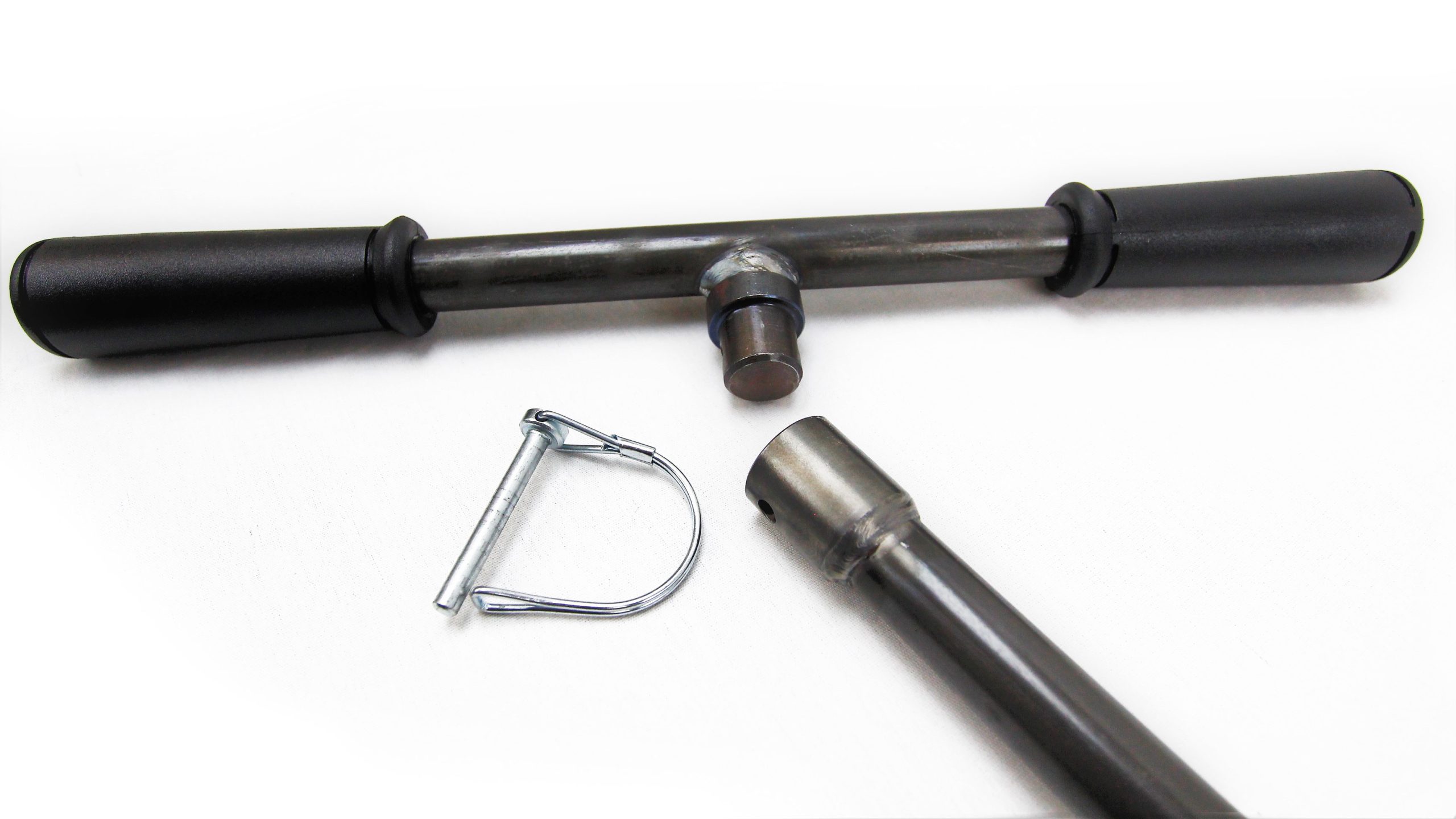
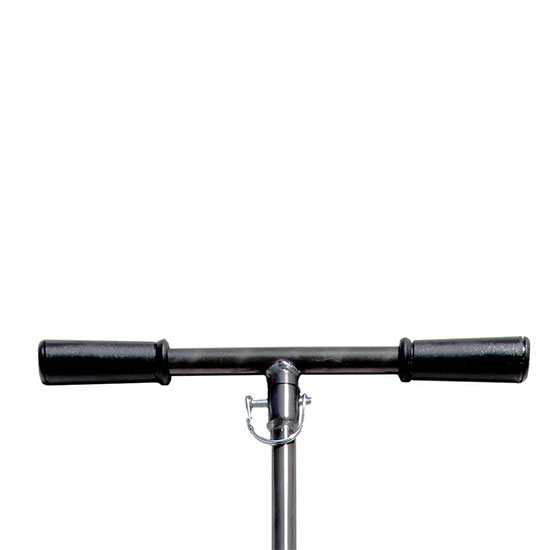
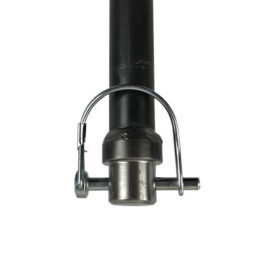
The auger extension (shaft) and T-handle are also made of carbon steel. All components attach quickly and securely with specially selected linchpins (snap pins). The compact profile of the pins reduces the potential to accidentally dislodge soil from the inside of the well hole. The convenient pin connection also allows for “reverse augering” if the auger were to become stuck.
Auger dimensions: 125cm (49″) x 43cm (17″) x nominal auger diameter 2 ¾”
Auger weight: Approx. 5 lbs.
Note: Soil or fill containing abundant large gravel, cobbles or boulders may not be feasible to test using constant head permeameters.
Feel free to contact us if you have any questions or concerns.
All prices are subject to change. Volume discount pricing may be available at the discretion of Dynamic Monitors. Contact us for more information.
Order online (preferred), or over the phone. Contact us at 1-888-747-7645 (SOIL) if you have any questions.
Reviews
There are no reviews yet.